Join 1,010+ learners exploring game logic with Jivoxar

Learn Game Logic Development Through Rules, Events, and Game Systems

Jivoxar helps learners understand how conditions, reactions, states, scenario branches, and logic diagrams shape gameplay structure

Jivoxar was born from a love for how games work inside

Jivoxar began from the wish to explain Game Logic Development through simple learning blocks: rules, events, conditions, reactions, states, and scenario links. We started creating materials for learners who want to understand how game systems work from the inside and how separate ideas form a logical gameplay process.

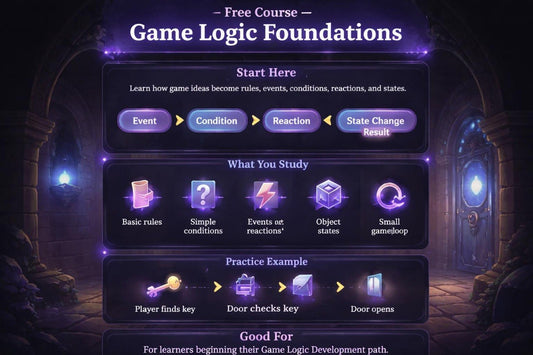
Try a starter learning module

Start exploring Jivoxar through a free introductory material. It shows how the basic elements of Game Logic Development work: events, conditions, reactions, states, and results. This is a helpful way to see our approach to explanations, examples, and practice tasks. Review the starter material to better understand how learning is structured at Jivoxar.

  • GitHub logo with a black circle and white silhouette of a cat.
  • LinkedIn logo on a white background
  • Black circle with a white 'M' in the center
  • Mathew Esparza - Game Logic Designer

    Mathew Esparza

    Game Logic Designer

  • Jodie Daniels - Gameplay Systems Planner

    Jodie Daniels

    Gameplay Systems Planner

  • Dina Snow - Interaction Logic Specialist

    Dina Snow

    Interaction Logic Specialist

  • Colorful geometric design with a lock symbol on a dark background

    Logic Mapping

    Helps break game
    ideas into rules,
    events, states, and
    results.

  • Colorful network or molecular structure icon on a dark background

    Scenario Thinking

    Teaches learners to
    view gameplay as a
    sequence of decisions
    and reactions.

  • Geometric crystal-like shapes on a dark background

    Offline Materials

    Materials can be
    downloaded and studied
    at a personal pace without
    constant connection.

  • Circular icon with various symbols on a dark background

    System Review

    Helps learners review
    their diagrams, find
    extra elements, and
    improve scenario logic.

Explore course topics before choosing

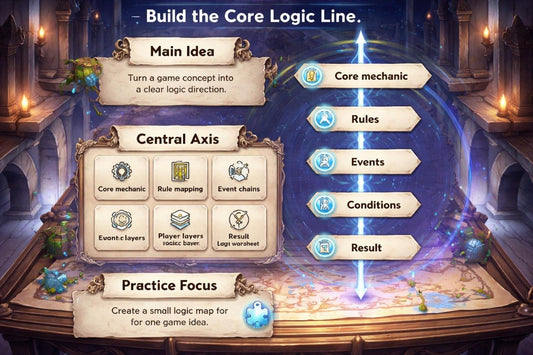
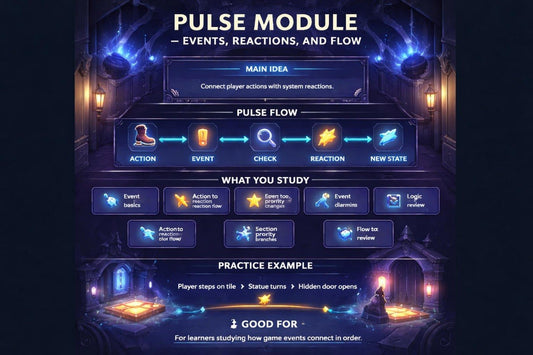
Explore the Jivoxar course directions before choosing a learning tier. Each course has its own focus: from basic game logic to scenario branches, states, events, and full system diagrams. The preview helps you understand the topics, material format, and level of detail.

  • Smartphone with app interface on a laptop keyboard
  • Person using a laptop with a colorful screen on a white background
  • Tablet displaying a Luma Course app interface on a white background

30-Day Money-Back Guarantee

Try the course risk-free. If you're not satisfied for any reason, get a full refund. No questions asked. Refund requests may be submitted within 30 days in accordance with our Refund Policy.

  • Jarrett Robertson

    Jarrett Robertson

    Jarrett came to Jivoxar with a basic understanding of
    game ideas, but he found it difficult to arrange rules,
    events, and reactions into one consistent diagram.

    The most useful parts for him were the examples with
    conditions, states, and short logic chains, because they
    helped him organize his own notes.

    “The materials helped me see where an action begins,
    what the system needs to check, and what
    result should appear afterward.”

  • Yesenia Winters

    Yesenia Winters

    Yesenia came in with experience creating level ideas, but
    she needed a better way to describe object behavior,
    states, and changes after player actions.

    State tables, transition examples, and exercises focused
    on explaining what changes after each event were
    especially useful for her.

    “The materials were comfortable to work with because
    they show logic not as an abstract topic, but as a
    set of readable steps.”

We teach learners to think like creators of game systems

Our mission is to help learners explore game logic through readable examples, diagrams, tasks, and structured study of mechanics. We focus on learning that helps show the connection between player action, system conditions, and the result inside a gameplay scenario.